
You wake up at 3 AM with your heart pounding.
The question is there, waiting for you in the dark: Was it too soon?
It follows you to work. It ambushes you in the grocery store. It whispers when you see their empty bed.
If this question is haunting you right now, I need you to know something: you’re not broken, you’re not weak, and you’re definitely not alone.
This guilt? It’s one of the most universal experiences of pet loss – and it shows up whether you made the decision to let them go or whether they passed naturally.
I know this because I’ve been there. Twice. And both times, the guilt found me.
Two Goodbyes, Two Different Kinds of Guilt
When my Border Collie Chase developed severe health issues at 12½ years old, a spinal condition eventually left her unable to walk.
She couldn’t go to the bathroom on her own. She was coughing. Her abdomen was swelling. The health problems were cascading, each one making the next worse.
Chase, who used to light up chasing frisbees – leaping to catch them in mid-air – couldn’t even stand anymore.
The vet looked at me with kind eyes and said, “You’re making the right decision. Her quality of life just wouldn’t be good.”
I knew he was right. I knew it.
But that didn’t stop the thoughts: What if there was something I could have done? What if I could have waited just a little longer? What if…
I didn’t want Chase to suffer. That’s why I made the decision. But the guilt still came.
When Nature Takes Its Course, Guilt Still Finds You
A few years later, my Siberian Husky Onyx was 15½ years old.
She stopped eating one day, and I thought maybe it was the food. I drove to the pet store and bought every type of food I could find, trying desperately to find something she’d eat.
Onyx, who’d been locally famous for “playing” chess by picking up pawns from the board, just curled up in her bed and wouldn’t move.
It happened so fast. The vet’s office was closed, and I planned to take her first thing in the morning. But by morning, she was gone. She passed naturally, peacefully, with me sleeping beside her on the floor.
You’d think there wouldn’t be guilt with a natural passing, right? She was 15½. It was her time. Nature took its course.
But the guilt still came – just a different flavour of it: Why didn’t I see the signs sooner? Should I have rushed her to an emergency vet? Did I miss something?
Here’s what I learned from losing both of my dogs in different ways: Guilt doesn’t care how your pet died. It shows up anyway.
When you make the decision to euthanise, you feel like you’re giving up on them – even when the vet confirms it’s right, even when you can see them suffering. The guilt whispers: What if they had one more good day?
When they pass naturally, the guilt asks: Why didn’t I do more? Why didn’t I see this coming?
Both are asking the same question: “Did I fail them?”
The answer is no. You didn’t.
What Nobody Tells You When You Get a Pet
When you bring home that puppy or kitten, or when you adopt that senior dog who needs a second chance, nobody sits you down and prepares you for this part.
Nobody warns you that someday you’ll have to make impossible decisions.
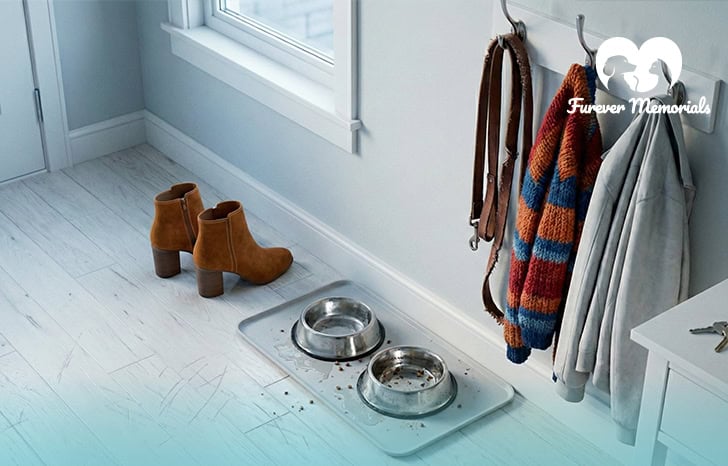
Nobody explains what to do after they’re gone – what do you do with the ashes? Where do you put their collar? How do you handle the empty food bowl?
Nobody prepares you for how everything in your house will remind you of them for months, even years.
The flashbacks. The dreams where they’re still alive. The moments when you forget they’re gone and reach for the leash.
This is the part of pet ownership nobody talks about, but every single pet parent eventually faces.
Some pet parents find that creating a physical memorial – whether it’s a garden stone, a planted tree, or a dedicated space – gives them a tangible place to direct their grief. It doesn’t erase the guilt, but it can transform it into something that honours their pet’s memory.
Does the Guilt Ever Go Away?
I wish I could tell you that the guilt completely disappears. But the truth is more nuanced than that.
The guilt does fade over time. The sharp edges soften. The questions don’t hit quite as hard.
But it’s always kind of there, in some small way. You’ll still occasionally wonder: Did I do this right? Could I have done something different?
What changes is that you learn to accept it. You reach a point where you understand that you made the best decision you could with the information and circumstances you had at that moment.
You can’t change what happened. And gradually, painfully, you learn to make peace with that.
A Gentle Reminder:
The guilt you’re feeling isn’t evidence of failure – it’s evidence of love. Whether you made the decision or nature did, you acted in your pet’s best interest. The “what ifs” are normal, universal, and don’t mean you did anything wrong.
Why Some People Need Something They Can Touch
For some pet parents, the guilt needs somewhere to go.
Not everyone processes grief the same way. Some people journal. Some talk to friends. Some volunteer at animal shelters. Others throw themselves into work.
But some of us need something physical. Something permanent. A place where we can say, “They were here. They mattered. They’re still loved.”
This isn’t about “getting over” the guilt – it’s about transforming it into something that honours your pet instead of haunting you.
For many people, that means creating a memorial space. A garden corner. A planted tree. A stone marker. Something that acknowledges the weight of what you’re carrying and gives you a place to set it down, even just for a moment.

What Can Help You Through This
When you’re carrying this weight of guilt, here are some things that might help:
Give Yourself Permission to Grieve
There’s no right way to process this loss.
Some people find comfort in creating memorial gardens with a permanent marker. Others draw or paint portraits. Some create small shrines with photos and their pet’s collar. Others find peace in writing letters or journalling about memories.
What matters isn’t what you choose – it’s that you give yourself permission to honour them in whatever way brings you peace.
The grieving process isn’t something you can skip – you have to walk through it. And everyone’s path looks different.

Lean on Validation
If your vet confirmed you made the right choice, hold onto that when doubt creeps in. Even though your specific loss is uniquely yours, connecting with others who’ve experienced pet loss can help you feel less alone.
Create New Routines Gradually
The old routines – feeding times, walks, bedtime rituals – leave painful gaps. You don’t have to fill them immediately, but eventually creating new patterns can help. Maybe it’s tending a garden, maybe it’s a new morning ritual, maybe it’s volunteering at a shelter when you’re ready.
Be Patient With the Timeline
The guilt will soften over time. You’ll reach a point where you can accept that you made the best decision possible with the circumstances you faced.
The key is finding what resonates with YOU – what helps you honour their memory while also allowing yourself to heal.
What Helped Me Find Peace
After losing Onyx and Chase, I tried everything to cope with the guilt. I talked to my vet. I connected with other pet parents. I gave myself time.
But I kept coming back to the same need: I wanted something permanent. Something that would last as long as my memories of them.
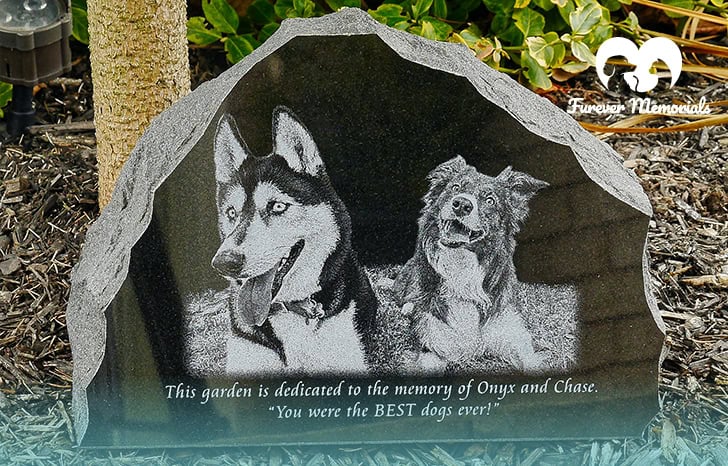
I created this memorial for them in my garden. It sits amongst the flowers I plant each spring. When I’m out there tending them, I remember Chase’s endless energy and Onyx’s gentle presence – and the guilt softens into gratitude.
When the guilt creeps in – and it still does sometimes – I go look at their memorial. I tend the flowers. I remember Chase’s “jump in my arms” trick and Onyx’s chess-playing antics. And slowly, the guilt transforms into gratitude for the years we had together.
The memorial didn’t erase my guilt. But it gave me a place to honour them instead of just hurting.
If You’re Someone Who Needs Something Permanent
Not everyone does. Some people find peace through other means, and that’s completely valid.
But if you’re reading this and thinking, “Yes, I need that. I need somewhere to put these feelings. I need something that will last” – I understand that need intimately.
That’s why I create pet memorials using the same granite and diamond-impact engraving my family has used in cemeteries since 1965. When I lost Onyx and Chase, I used those same techniques to create their memorial – and realized other pet parents needed this too.
When you’re ready – whether that’s now or months from now – I’d be honoured to help you create that place of peace.
You Did Everything Right
Whether you made the decision to let your pet go, or whether they passed naturally and you’re questioning if you missed the signs – you need to hear this:
You made the best decision you could with the information you had at that time.
You acted out of love. You didn’t want them to suffer. You cared for them through their final days. You showed up for them.
Your pet had a life filled with love because of you. They knew comfort, joy, adventure, and companionship because you chose them. And when the time came – however it came – you were there for them.
The guilt will soften. The memories will shift from painful to warm. And one day, you’ll be able to think of them and smile before you cry.
Until then, be gentle with yourself. The question “was it too soon?” means you cared. It means they mattered.
And they did. They really, really did.
The guilt you’re feeling is real, and it’s heavy. But you don’t have to carry it alone. Whether you find peace through time, through talking, through creating something permanent, or through all of the above – give yourself permission to heal in whatever way works for you.

This really helped me. We had to put down our cat Milo 3 weeks ago and I can’t stop crying. He was 17 and had kidney problems. The vet said we were doing the right thing but I keep thinking what if we tried one more thing? What if he could of had more time?
The part about the guilt coming no matter what really hit me. Everyone keeps saying he lived a long life but I still feel terrible. Thank you for writing this, it helps to know I’m not the only one feeling this way.
My dog Duke died last month. He collapsed on our walk one morning, he was only 9. The vet said it was his heart and there was nothing we could have done… but I keep thinking did I miss something? Was he sick and I didn’t notice? Sucks! :/ The part about your dog Chase no longer being able to walk really connected with me.